

NATIONAL EPILEPSY CENTRE EXPANSION PROJECT CLOSED
In September 2025, JPMC informed NRPWF of its decision to establish an Opioid Agonist Maintenance Treatment (OAMT) Centre within the National Epilepsy Centre building. NRPWF was initially served with a seven-day notice to vacate the entire premises to facilitate the project. Such an action would have resulted in the closure of the National Epilepsy Centre and the disruption of essential services for thousands of people with epilepsy who depend on the Centre for their continuing care.
Recognizing the serious implications for epilepsy services, extensive discussions and negotiations were held between NRPWF, JPMC, and the Patient Aid Foundation (PAF). While NRPWF fully appreciated the importance of establishing the OAMT Centre, it also emphasized the need to safeguard the continuity of specialized epilepsy services that had been built over twenty years through the generosity of donors and the dedication of healthcare professionals.
Following these discussions, a mutually acceptable solution was reached. It was agreed that NRPWF would retain the ground floor of the building to continue providing uninterrupted epilepsy services, while the first and second floors would be allocated for the establishment of the OAMT Centre.
This arrangement was formalized through a tripartite Memorandum of Understanding (MoU) between NRPWF, JPMC, and PAF, clearly defining the responsibilities of each organization. Under the agreement, PAF undertook the structural modifications, partitioning, sealing of internal access, and the construction of separate entrances to ensure the complete physical separation and independent functioning of the two facilities. Upon completion of the works, the first and second floors were formally handed over to JPMC for the operation of the OAMT Centre in October 2025, while NRPWF continues to provide epilepsy services from the ground floor.
Although this collaborative solution successfully preserved the continuity of epilepsy care, it also marked the closure of several important expansion initiatives that NRPWF had planned and undertaken for the upper floor. These included the dedicated Video-EEG Telemetry Unit, epilepsy training and education facilities, research infrastructure, and other specialized services that had been envisioned as part of the Centre’s long-term development.
It is also a matter of deep regret that significant philanthropic contributions had previously been invested by generous donors in developing infrastructure and facilities on the first floor for the advancement of epilepsy care. As these areas are no longer available for NRPWF’s use, the intended benefits of those investments for people with epilepsy could not be fully realized. NRPWF remains profoundly grateful to all its donors whose generosity made these developments possible and sincerely regrets that circumstances beyond its control have prevented the continued utilization of these facilities for their original purpose.
Despite these unforeseen developments, NRPWF remains steadfast in its commitment to ensuring uninterrupted, high-quality epilepsy care. The agreement reached with JPMC and PAF prevented the complete displacement of the National Epilepsy Centre, safeguarding twenty years of dedicated epilepsy services, and protecting the interests of 12,000 registered patients and many new treatment seekers.
From Grey Structure to
Functional Epilepsy
Diagnostic & Research Facility
Our initiative to expand diagnostic and management services for epilepsy, and to strengthen our research capacity in this vital field, began on 2 November 2021. Despite significant logistical and financial challenges, steady progress has been made. We are now on the verge of launching extended diagnostic and management services, bringing us another step closer to offering epilepsy surgery and further advancing epilepsy research.
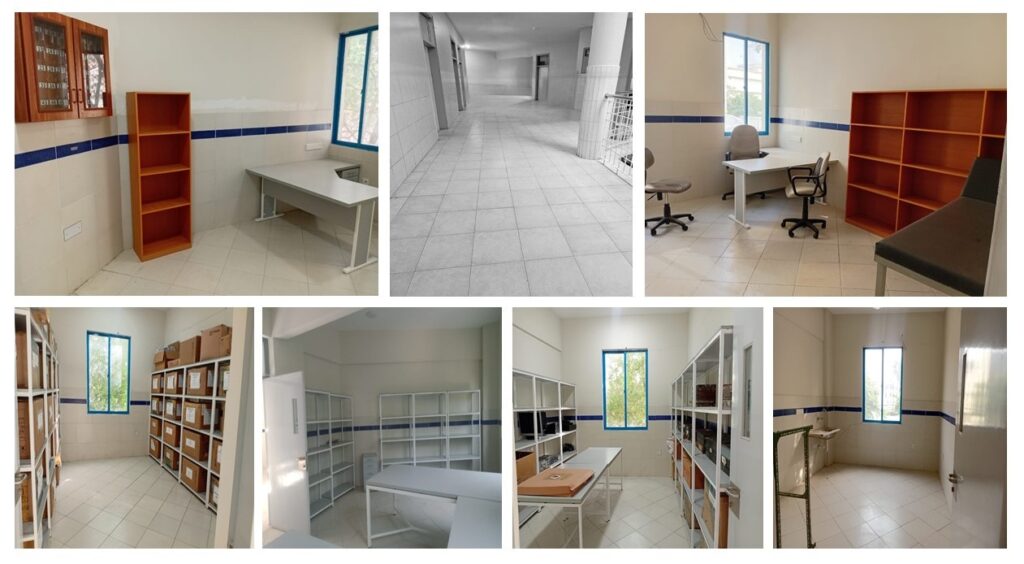
Significant progress has been made in transforming the previously unfinished first-floor grey structure into a fully operational, purpose-designed facility supporting advanced epilepsy diagnostics, research, and organizational functions.
The following key developments have been completed to date at the cost of PKR 25,000,000/=:
1. Comprehensive Civil Works
Extensive finishing work has now been completed, including plastering and surface smoothing, flooring and tiling, electrical and plumbing installations, sound-proof windows and doors, painting, data-networking setup, and all essential safety fittings. These upgrades have transformed the bare grey shell into a safe, fully compliant, and patient-ready facility.
2. Purpose-Built Functional Spaces
A range of specialized rooms have been constructed to support clinical services, research, and organizational needs:
The Prolonged EEG Monitoring Unit consists of three sound-proof, glass-enclosed monitoring rooms, each with an attached washroom, along with a spacious nursing station designed for continuous visual and electronic patient monitoring. The unit is fully equipped with the required infrastructure to support long-term video-EEG diagnostics.
Research Room, designed to support ongoing scientific and clinical epilepsy research.
Digital Library, providing access to global literature, training materials, and academic resources.
Public / Community Awareness & Education Space to support epilepsy education, community engagement, and public health awareness initiatives, strengthening our long-standing outreach mission.
ILAE & IBE Secretariat Offices, dedicated to professional coordination, global and regional initiatives, and administrative activities.
Secure Storage Facilities, including areas for NGO operational supplies, patient management records, archived NGO documents and records for mandatory long-term data preservation.
3. Diagnostic-Grade Soundproofing
Specialized soundproofing has been installed, particularly in the EEG monitoring unit, to eliminate external noise interference and ensure the high accuracy required for prolonged EEG recordings.
4. Interior Furnishing and Setup
The entire space has been partially furnished, including workstations, cabinetry, diagnostic room fittings, and patient-support areas, ensuring a functional and well-organized working environment.
To complete the project, we need your ongoing support.
a. Acquisition of Prolonged Video EEG Systems & Furnishing of the EEG monitoring units and nursing area
Procurement of prolonged video EEG equipment, including machines requiring import, is underway to fully equip the monitoring unit for advanced epilepsy diagnostics.
Furnishing like air conditioners, surgical beds, and seating furniture for attendants, staff and doctors, linen and mandatory medical equipment and disposables are required.
b. Acquisition of Office Furnishing
Partial furnishing has been done; computers, printers, air-conditioners and digital library material (e-books journals and research related online registrations to be done.
c. CC TV Cameras System
For over security of the space and furnishings.
Play Video